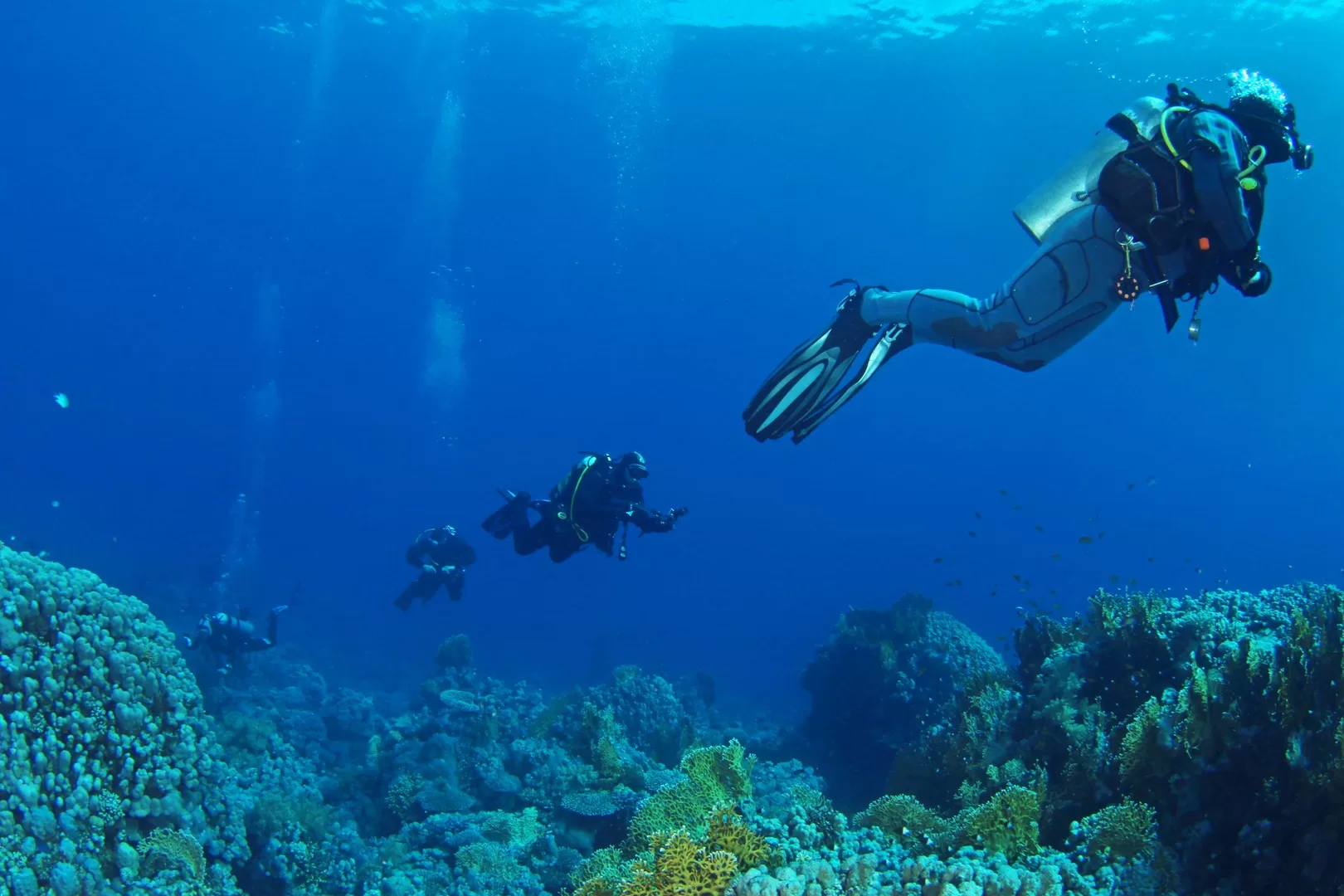
Guided Fun Dive – 1 Dive
Fun dive · Half Day

Bezz Diving is an independent dive centre in Mellieħa, in the north of Malta, offering guided scuba diving and SSI diving courses for all experience levels.
Whether you are taking your first breath underwater, returning to diving after a break, continuing your training or looking to explore Malta’s famous wrecks and deeper dive sites, we aim to make every dive relaxed, personal and enjoyable.
Bezz Diving was founded by Mark “Bezz” Bezzina in 2012 and became known for its friendly atmosphere, personal service and welcoming approach to scuba diving in Malta.
In September 2026, James and Sol took over Bezz Diving and began the next chapter of its story.
Our aim is to build on everything that has made the centre special while continuing to develop it for the future. We believe diving should feel personal, not rushed, which is why our guided diving groups are normally limited to a maximum of four divers.
From our dive centre in Mellieħa, we have excellent access to some of the best diving in Malta, Gozo and Comino. Malta offers an incredible variety of dive sites, including reefs, sheltered bays, caves, walls and some of the best wreck diving in the Mediterranean.
We always consider the conditions, your certification level, experience and what you would like to get from your dives when choosing the best sites.
As an SSI dive centre in Malta, we offer training from beginner level through to specialty courses including Deep Diving, Wreck Diving, Navigation, Perfect Buoyancy and Enriched Air Nitrox.
Whether you are joining us for a single guided dive, completing an SSI course or spending several days exploring Malta’s underwater world, you can expect a warm welcome, local knowledge and a dive experience tailored to you.
We look forward to welcoming you to Bezz Diving in Mellieħa and sharing some of the best scuba diving Malta has to offer.

Fun dive · Half Day

Fun dive · 1 day

Fun dive · 1 Day

Fun dive · 2 Days

Fun dive · 3 Days

Fun dive · 4 Days

Fun dive · 5 Days

Course · 2-3 hours

Course · 4-5 Hours

Course · 3 days

Package · 1 day

Package · 2 Days

Package · 2 Days

Package · 3 Days

Course · 3 days

Course · 3 days


Course · 2 hours

Course · 1 day

Course · 2 Days

Relaxing reef; sea bream and groupers. Good progression dive. Scenic reef dive with large rock formations, gullies, swim-throughs and replica Phoenician amphorae. The route can also include Left Arch / Ben’s Arch, with good opportunities to spot octopus, moray eels, groupers, bream and other Mediterranean marine life..

Sheltered shore dive beneath Popeye Village with rocky reef, large boulders, swim-throughs, seagrass, a large 3m anchor at around 8m and the impressive Scorpion Cave.

One of Gozo’s largest and most dramatic cave dives, with a long overhead passage, very limited natural light, a sandy and shingle bottom, large boulders and a huge inner chamber with an enclosed air pocket. The blue-water view looking back towards the entrance is particularly impressive.

Among Europe's premier dives; arch and two caves with dramatic light. One of Gozo’s most famous dive sites, featuring a natural limestone Blue Hole, a large underwater arch opening to the sea, dramatic vertical walls, caves and impressive rock formations. Excellent visibility and strong photographic opportunities.

A spectacular large domed sea cave with a huge air pocket, dramatic blue light effects and excellent acoustics. The cavern is entered through a shallow underwater opening and opens into a massive chamber where divers can surface inside.

80m underwater tunnel to a wall dive near the collapsed Azure Window.

Dramatic wall and reef dive with a shallow plateau, large boulders, caverns and the well-known vertical chimney/tunnel. The chimney starts near 6m and exits into a cave around 16m, with the outer wall continuing down much deeper. "The Chimney" tunnel; groupers and lobsters.

A varied reef dive combining two of Ċirkewwa’s best-known features: the Madonna statue in a small cavern at around 18m and the large natural Ċirkewwa Arch. The route includes reef walls, swim-throughs, caves and rocky formations with good Mediterranean marine life. Beginner-friendly swim-throughs, caves and tunnels; statue and arch.

A dramatic underwater pinnacle rising from very deep water to around 8–10m below the surface. The site offers walls, steep drop-offs, rocky crevices and excellent marine life including amberjacks, dentex, moray eels, octopus, lobsters and barracuda. Sheltered pinnacle; lobsters, octopus and moray eels.

Upright 39–40m former tourist ferry with two main decks to explore. Scuttled in 2006 as an artificial reef, with good opportunities to see rays, gurnards, giant tun shells and other marine life around the sandy bottom.

One of Gozo’s most popular wreck dives. The 58m former passenger ferry sits upright and has three decks to explore. Its distinctive central staircase is one of the best-known underwater photo features in Malta and Gozo. 50m scuttled ship with multiple safe penetration points. Deep speciality.

A 52m former patrol boat sitting upright on sand, with the superstructure, deck areas and distinctive gun mounting providing excellent wreck scenery. The wreck has numerous openings, plenty of marine life and is one of Malta’s most popular wreck dives.

A 52m former patrol boat sitting almost upright on white sand off Comino. The shallow depth, open structure and good natural light make it an excellent wreck for less experienced divers, training dives and underwater photography.
One of Gozo’s most dramatic wall dives, with steep drop-offs, fissures, caves, chimneys, large boulders and excellent visibility. The site is particularly known for abundant marine life including groupers, octopus, scorpionfish, dentex and barracuda.

Historic tugboat wreck lying upright on a sandy seabed at around 34m. Scuttled in 1992 as an artificial reef, the Rozi is largely intact and is now covered in marine life. Excellent visibility, impressive views of the wheelhouse, deck and mast, and one of Malta’s best-known wreck dives.t, superb visibility.

A maze of shallow caves, tunnels and interconnected swim-throughs with excellent light effects, colourful walls and plenty of marine life. One of Comino’s standout dives, with the route also taking in a pinnacle at around 18m.

A varied Ċirkewwa reef dive combining the large Sugar Loaf rock formation with the deeper historic anchor. The route includes reef, boulders, sandy areas and plenty of Mediterranean marine life, with the anchor itself often covered in marine growth. Popular night dive.

One of Malta’s most impressive wreck dives. The Um El Faroud is a 110m former Libyan oil tanker sitting upright on sand, with huge deck areas, superstructure, propeller and numerous openings to explore. The wreck broke into two sections during a severe storm in 2005–2006, creating an additional dramatic feature.

A very varied shore-diving area with a sheltered valley, East Reef, West Reef & Caves, steep walls, drop-offs, gullies, caverns, a diving helmet statue and access to the Um El Faroud wreck. It is also a popular location for night diving.
Completely normal. Most people feel nervous before their first dive. Instructors are patient and used to first-timers, and you go at your own pace. A pool or shallow-water session before the ocean dives builds your confidence.
None at all. A beginner try dive is designed for complete first-timers, with no experience or certification needed, just reasonable general health.
You don't need to be a strong or fast swimmer. A try dive needs no swimming at all, with an instructor beside you the whole time. Certification courses include a relaxed swim assessment (around 200m, any stroke, no time limit) plus a 10-minute float or tread, usually done in a pool.
Yes. A beginner try dive or basic course lets you experience diving with an instructor right beside you, no swimming required.
Children can usually try diving in a pool from around age 8, with junior certification typically starting at 10. Younger and junior divers have shallower depth limits, and from about 12 divers can go to standard depths. The team will confirm the right option for your age.
Diving has an excellent safety record with proper training and supervision. Instructors are experienced professionals, student groups are kept small, and equipment is maintained to manufacturer standards. You always dive within the limits of your training.
Yes. Recognised dive certifications are internationally recognised and never expire. If you haven't dived in a long time (a year or more), a short refresher is recommended to get comfortable again.
They are the main global training agencies and all follow the same international (WRSTC) standards, so their certifications are recognised worldwide. A completed certification carries across agencies, so you can dive or continue your training with any centre. The one exception is a mid-course referral, which must be finished with the same agency you started with. The team will tell you which agency they teach.
A fully completed certification transfers across agencies, so if you already hold a cert you are welcome to continue with any centre. A mid-course referral is different: if you started elsewhere with theory and pool done but dives still to do, you need to finish with the same agency you started with. Let the team know your details.
You usually won't lose your progress. Many centres can issue a certification for the level you completed, or a referral form so you can finish the remaining parts later at another centre. The team will explain their terms.
Often yes. Many centres include digital learning so you can get the theory done at home and spend more time in the water when you arrive. Ask the team whether it's available for your course.
You must complete a medical questionnaire before diving and answer it honestly. Some conditions, such as asthma, heart conditions or epilepsy, require a doctor's clearance before you can dive. If you're unsure, the team will guide you.
You must wait a minimum of 24 hours after your last dive before flying. This is a firm safety rule with no exceptions, to prevent decompression sickness.
It's recommended. Some courses include short-term cover and some don't, so the team will let you know what's included and can point you towards dive insurance options.
Swimwear, a towel, reef-safe sunscreen, flip-flops, and your certification card if you have one. All the dive equipment is usually provided. Bring seasickness tablets if you're prone to it.
Usually the centre provides all the scuba equipment you need (BCD, regulator, wetsuit, mask, fins and tank). The team will confirm exactly what's included for your dive or course.
Once you're certified, usually yes. On a beginner course cameras are normally held back at first so you can focus on your skills. Some regions also have their own rules on underwater cameras, so check with the team.
Marine life is wild, so sightings are never guaranteed. The team can tell you what's commonly seen and the best sites and seasons for it.
Rain on the surface doesn't affect diving, and once you're underwater you won't even know it's raining. Trips are only called off for genuinely unsafe conditions like storms or very rough seas, which is rare, and it's always the team's decision with safety first.
Booking ahead is recommended, especially in busy periods, as courses and trips can fill up. Very late or same-day bookings can't always be guaranteed. The team will confirm availability for your dates.
You can message the team right here, or use the online booking link if you're ready to book.
Often they can, joining the trip as a certified diver. Whether they can join every dive, and whether there is a cost, depends on the day and how many dives they do, so the team will confirm the plan and any price for your situation.
I can't see live bookings from here, but the team can. Drop them a message or email and they'll confirm everything for you.